

Interview with RWE – Regina Pfortje, Senior Manager Global Employer Branding at RWE AG
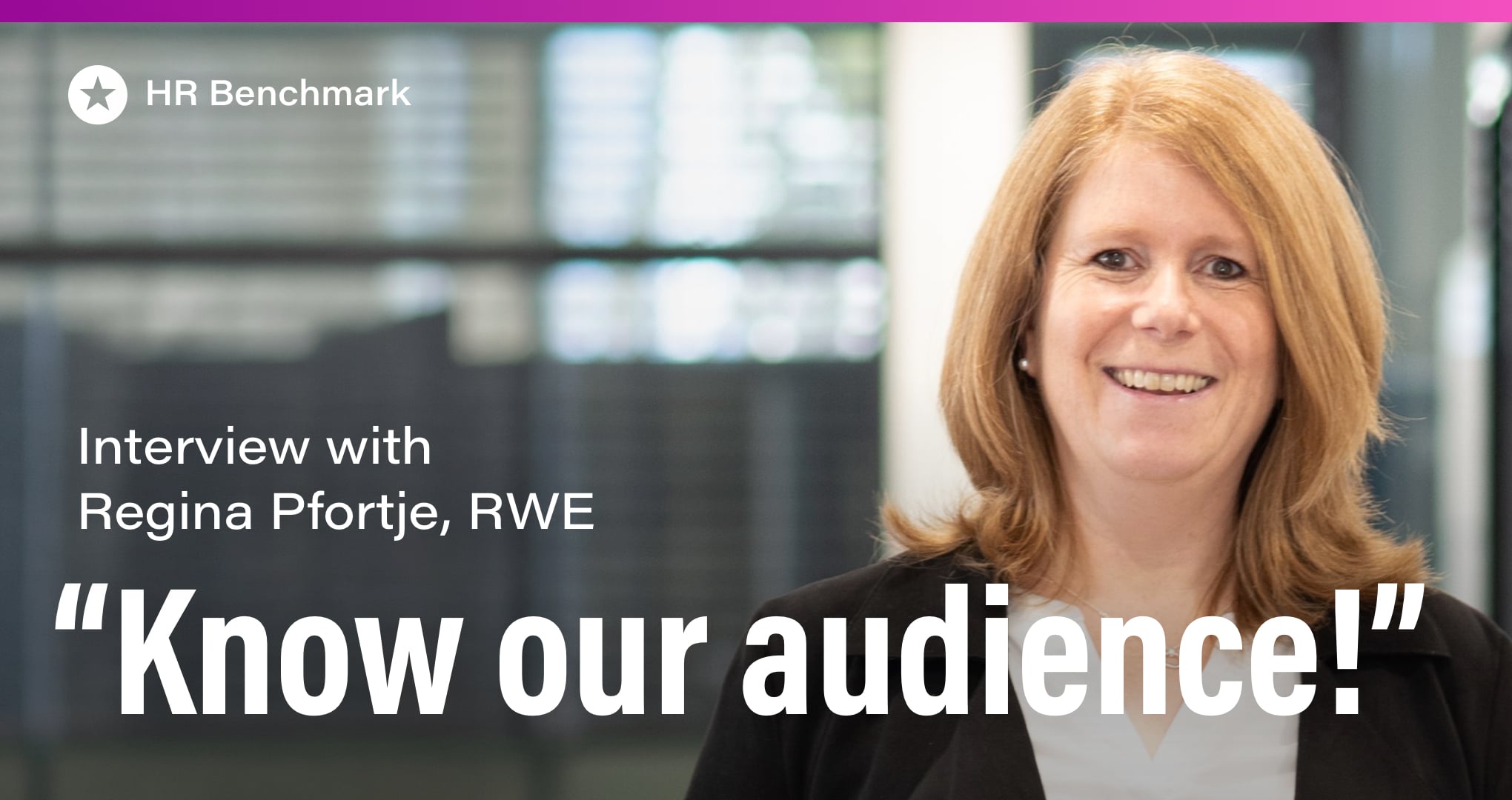
RWE takes first place in the HR Benchmark 2026 for the very first time – with a careers site that consistently embeds job opportunities within the story of the energy transition. Regina Pfortje, Senior Manager Global Employer Branding at RWE, talks in this interview about transparency, audience logic, the role of AI, and what a careers site will still need to deliver three years from now. The interview was conducted in English.
RWE claims the number one spot in the HR Benchmark 2026 for the very first time. This rise to the top is no coincidence: RWE's careers site stands out through a compelling blend of clear candidate guidance, a well-structured careers section, and employer communications that are closely intertwined with the company's forward-looking themes.
Careers at RWE aren't told in isolation – they're visibly embedded within a bigger picture of the energy transition, innovation, and digitalisation, from hydrogen projects to "Digitalization @ RWE."
This is precisely what the Benchmark identifies as a key trend: employer profile and tangible career offerings are growing ever closer together.
So how do you create a careers presence that so convincingly brings together strategic transformation and real career prospects? What role do transparency, audience segmentation, and digital tools play? And how does the winner of the HR Benchmark view topics like AI readiness, measurability, and the careers site of the future?
We spoke with Regina Pfortje, Senior Manager Global Employer Branding at RWE, to find out.
Christian Berens: Regina, RWE is at the very top of the HR Benchmark for the first time. Congratulations on securing number one! Hand on heart – did this come as a surprise, or was it a goal your team had been consciously working towards?
Regina Pfortje: Thank you very much, Christian. We’re delighted to have reached No1 for the first time! Was it a surprise? Yes, a little bit because after the global relaunch of our careers website presence and some of our key country microsites last year we were confident but still not 100% sure if all the work we put into it would be appreciated by our audiences. It seems, we’ve succeeded this year and are very happy that our concept of putting our audiences at the centre of all our efforts paid off so well.
Christian Berens: What immediately strikes me when I look at your careers site is that you don't just land on a job board – you land right in the middle of a story. Energy transition, hydrogen, digitalization. Careers at RWE are told as part of a larger transformation. That feels very intentional. How did this idea come about?
Regina Pfortje: You’re absolutely correct, Christian. RWE has a very exciting and engaging story to tell and it’s important to share exactly that. We’re a key driver of the energy transition with a strong legacy and have constantly re-invented ourselves for more than 125 years. The modern technologies like hydrogen or solar play a crucial role for the success of our strategy but so does our constant aim to evolve, becoming more digitalised and also making sure to incorporate AI where appropriate.
Christian Berens: Behind a careers site like yours, there's clearly a whole apparatus at work. I'm curious: who actually "owns" the careers site at RWE? Does it sit within HR, corporate communications, marketing – and how do you organise the collaboration so that such a cohesive overall picture emerges at the end?
Regina Pfortje: We, the Global Employer Brand & Inclusion team own the careers site however it’s part of the global website presence of RWE. We’re in close contact with all the relevant interfaces like our Digital Communications teams (which is part of corporate communications), the colleagues from Digital and HR IT and especially with our counterparts in the various RWE operating companies.
It’s important to us to foster a strong collaboration built on the mutual aim to address all our different audiences in the best way possible.
Christian Berens: Diversity, purpose, modern work culture – nearly everyone puts these on their banner nowadays. RWE goes a step further, for example with the Diversity Dashboard that delivers real numbers. What motivated you to be so transparent – and were there voices internally who said: do we really need to share that much?
Regina Pfortje: To be very frank, when applicants turn into new joiners they find our very soon if that’s what they signed up to is true. Why not be transparent right from the start? We are fully aware that not everything’s perfect and we need to continuously work on improving together. The Diversity Dashboard is therefore a key feature for us and we’re glad to be able to share it. And no, that’s actually nothing that was questioned at all.
Christian Berens: I'd like to be honest here as well. Number one is truly outstanding, but it doesn't mean everything is 100% perfect. Across the board, only a few companies back up their claims with verifiable data, and very few address topics like salary transparency or equal pay. These are areas where HR in Germany still has some catching up to do. Where do you see blind spots at RWE itself?
Regina Pfortje: You make an interesting point. Having talked about transparency before, we’re definitely not perfect and there are still some topics like the salary transparency that we would love (and need) to pick up. We hope that the new law (“Entgeldtransparenzgesetz”) will help us put more focus on this important topic. We would also like to be more transparent when it comes to the results of our regular Employee Opinion Survey. The results in total are pretty impressive compared to other companies, we think, and would definitely support our aim to be as transparent and authentic as possible. Let’s see, what the future holds. We still have some convincing to do.
Christian Berens: RWE is a group with very diverse target audiences – from internship seekers and power plant operators in Duisburg to management roles like Head of Regulatory Affairs in Japan. How do you manage to engage all these different people on a single careers site without it becoming overwhelming?
Regina Pfortje: Our approach is to put our audiences in the centre of all we do providing information that we know is the most relevant for applicants, engaging and piques their curiosity. We provide information that’s of global relevance but also highlight local/regional details. Ideally job seekers also follow us on Linkedin or Instagram to get more insights but we’re aware that we might not be able to answer all questions in great depth. But that’s o.k. We also provide information in local languages in some of our core regions (e.g. Italian or Dutch).
Christian Berens: Let's be honest: on most careers sites, genuine interaction is few and far between. Chatbot adoption is declining, hardly any companies still offer live chats, and only about a third of the companies we studied provide direct contact persons. What does this look like at RWE? Where can interested candidates actually have a real conversation with RWE before they hit "Apply"?
Regina Pfortje: Offering a real conversation as part of a careers website is not easy. We’ve tried a live chat for high school students for quite some time but unfortunately, the response was very low. We were always hesitant, almost reluctant to include a chatbot because it has to perform very, very well to add value to the candidate experience. That’s why we decided to stick to our contact options email or phone, e.g. when you’re interested in one of our apprenticeship schemes or graduate programmes, you’ll always find at least one person to contact. From our colleagues responsible for the various programmes we get the feedback that this is being used quite frequently.
Christian Berens: That leads me straight to the next point, because it's all connected: Artificial intelligence is fundamentally changing how people search for jobs – and how companies find talent. I'm interested in your personal take on this: if you think three years ahead, what does the careers site of the future look like? Will it still resemble what we see today, or will candidates eventually use an AI agent to find the right job without ever having visited rwe.com?
Regina Pfortje: From our data we know that candidates are already using AI more often to find jobs or use AI to support their career, they even directly apply via AI once a suitable jobs comes up – without having visited our website. We’re very certain this trend will continue. Global trends also show that there’s a decline in website visits, therefore it will be crucial that our content is shown as part of the AI summary, which also means that we have to make our website AI ready and still accessible for candidates.
Christian Berens: And what does that mean in practice for you – is RWE already using AI in recruiting today? Or are you deliberately taking a more cautious approach?
Regina Pfortje: Integrating a CV Mating tool on our careers website was our first approach using AI. It’s an inhouse product to help candidates find suitable jobs as well being shown roles they may not have initially considered.
Other than that we’re taking a more cautious approach and are not using AI as part of our processes yet, however we’re looking into options, as probably other companies are as well.
Christian Berens: The HR Benchmark shows that personal connection and approachability continue to grow in importance. How important was it for you to make the RWE careers site feel not just polished and professional, but also accessible and human?
Regina Pfortje: Making the website human and as accessible as possible was definitely one of our main goals especially by showcasing authentic stories of our employees. On more or less all our pages you’ll find quotes and links to stories that really bring to live the content of that page. They are all in our blog where candidates can dive into nearly 120 stories from employees. Stories about their work, the challenges they overcame or what they like about working at RWE (spoiler: it’s the people and taking over responsibility for their topics 😉).
Christian Berens: The big question that probably everyone asks when they see your careers presence: is it worth the effort? How do you measure the success of your careers site – and which metrics convince decision-makers internally to keep investing in this area?
Regina Pfortje: We measure some of the typical KPIs like visitors, page visits, duration/ visit, bounce rate and sources (where do visitors come from), also on a YoY basis. It’s interesting to see that most of our “quality visitors” come from SEO while social media creates reach. We also place our figures into relation to our posted jobs because other than customer behaviour on ecommerce websites, applicants don’t return on a regular basis once they’ve applied. Therefore, KPIs might (in absolute numbers) be lower than in the previous year but still really good in isolation. In addition, we look at our best performing pages and the performance of pages we think are significant to evaluate any necessary adjustments.
We also look closely at the performance of our Early Careers content (Graduate Programmes/ Apprenticeship schemes) but that might be a discussion to have on another day!
Christian Berens: To wrap up: if you could share three things with other HR leaders who want to start working on their careers presence tomorrow – what would they be?
Regina Pfortje: That’s a really good question and it really depends on where you’re at with your website presence and development. These three should work for everyone and I’m pretty sure the majority of your clients already consider these tips:
- Know you audiences
- Be transparent and authentic
- Keep evolving: check trends, try out new features, keep your eyes open
Christian Berens: Regina, thank you so much for this conversation – and for the honesty. A number one ranking becomes all the more credible when you're also willing to talk about the areas where there's still room to grow. Many thanks!
Das könnte Sie auch interessieren
- Philipp Schindera, Leiter UK der Deutsche Telekom, im Interview: Warum die Corporate Website zum Faktenzentrum wird23. September 2026 | Christian BerensPhilipp Schindera, Leiter UK der Deutsche Telekom, im Interview: Warum die Corporate Website zum Faktenzentrum wird
- So arbeiten die besten Corporate Newsrooms im Ranking23. September 2026 | Christian BerensSo arbeiten die besten Corporate Newsrooms im Ranking
- Besser erklärt, aber nicht einfacher: Wo die digitale Bewerbung noch hakt9. September 2026 | Matthias EwenBesser erklärt, aber nicht einfacher: Wo die digitale Bewerbung noch hakt
- Krisenkommunikation ohne Darksite: Warum der Plan im Ernstfall ausfällt3. August 2026 | Christian BerensKrisenkommunikation ohne Darksite: Warum der Plan im Ernstfall ausfällt

- X-Odus? Halb Deutschland verstummt auf X28. Juli 2026 | Christian BerensX-Odus? Halb Deutschland verstummt auf X
- 5 Dinge, die auf jeder Karriereseite stehen – und warum sie niemanden mehr überzeugen15. Juli 2026 | Christian Berens5 Dinge, die auf jeder Karriereseite stehen – und warum sie niemanden mehr überzeugen
- Fünf CR-Auftritte, bei denen man sofort weiß, woran man ist25. Juni 2026 | Christian BerensFünf CR-Auftritte, bei denen man sofort weiß, woran man ist
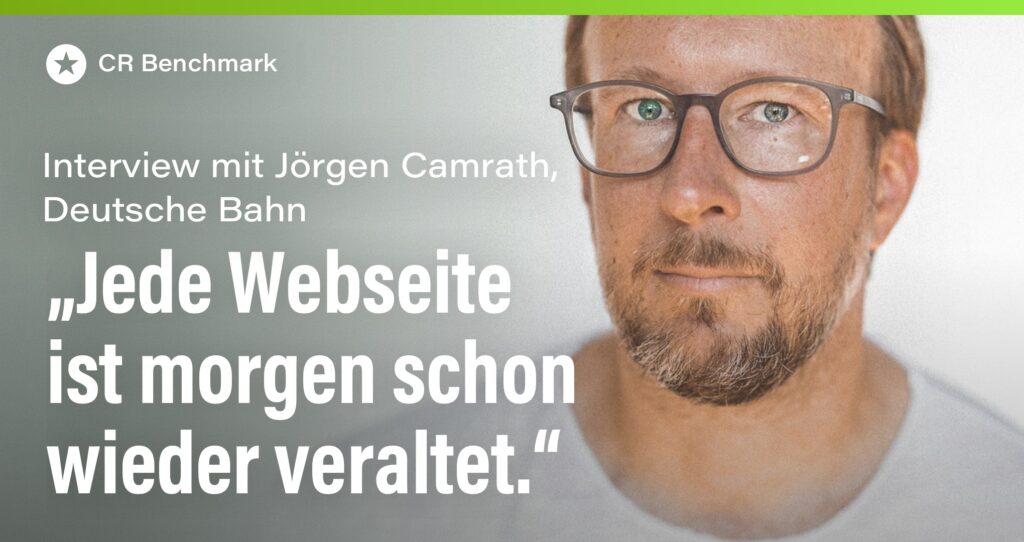
- Interview mit Jörgen Camrath, Team Lead Nachhaltigkeitskommunikation bei der Deutschen Bahn, zum CR Benchmark 202625. Juni 2026 | Christian BerensInterview mit Jörgen Camrath, Team Lead Nachhaltigkeitskommunikation bei der Deutschen Bahn, zum CR Benchmark 2026
- KI-Readiness & GEO: Warum Media Relations jetzt handeln muss17. Juni 2026 | Christian BerensKI-Readiness & GEO: Warum Media Relations jetzt handeln muss
- Vom PDF zum Reporting Hub: Warum der Geschäftsbericht mehr kann, als heruntergeladen zu werden10. Juni 2026 | Christian BerensVom PDF zum Reporting Hub: Warum der Geschäftsbericht mehr kann, als heruntergeladen zu werden
Unsere Autoren
 CEOChristian BerensChristian BerensExpertise:
Business Administration, Corporate Communications & Digital Communications.Herzblut:
Positive Unternehmenskultur & Haltung CFOThorsten GreitenThorsten GreitenExpertise:
Business Administration, Digital Communications, Investor Relations & Financial Communication.Herzblut:
Digitale Transformation & New Technologies Das NetFed-TeamNetZwergNetZwergExpertise:
Webanalyse, Beratung, Prozessbegleitung, Kommunikationsstrategie, Contentstrategie, Contenterstellung, Design, IT, Technologie, Support, Datenschutz, Sicherheit, CO2-Optimierung, Barrierefreiheit …Herzblut:
Digitale Erlebbarkeit von Kommunikation

Haben wir Sie inspirieren können?
Lassen Sie uns miteinander sprechen. Wir finden für Sie die ideale Lösung.